THE COMPOSITION
Citrus, Shiso, Birch, Mint, Pine, Cedar, Musk
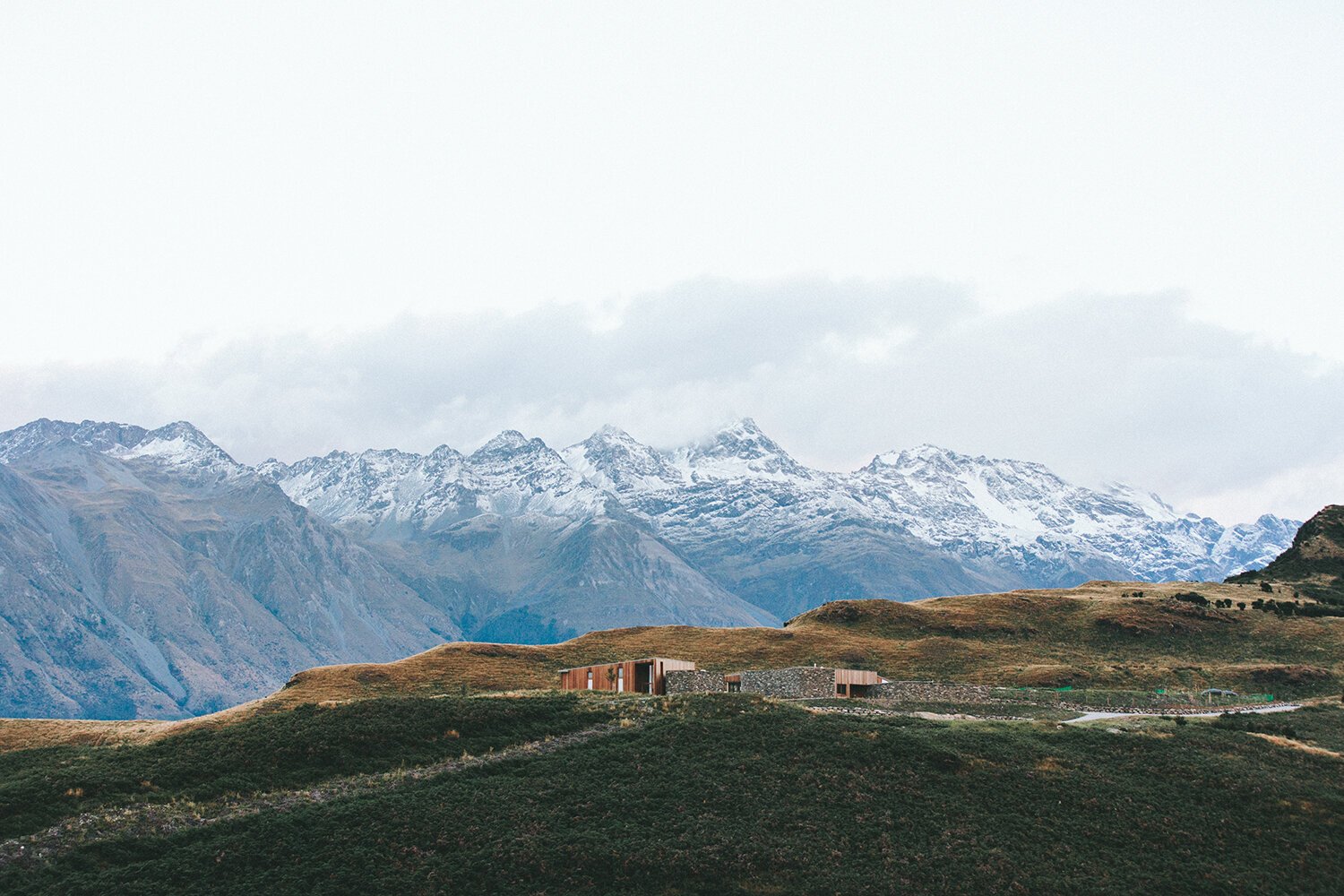
Anabasis is a long journey upland, a wind through the trees in early spring. Cool and distant, wild and free. Anabasis (from the Greek 'to go upward') is an expedition from the coast to the interior of a country. It is also the title of two great works that describe such a journey, one by Xenophon and one by Saint-John Perse. Anabasis is adventurous and mysterious, bringing the scent of Japanese shiso and mint wafting through a forest of cedar and pine.
"Cyrus now advanced through Arabia, having the Euphrates on his right, five days’ march through the forest. In this region the ground was broken and dark, heaving as the sea. It was covered with pines, and whatever other kinds of shrub or reed grew on it were all odoriferous as perfumes. On the third day Cheirisophus said, “Cast your eyes upon these mountains, and observe how impassable they all are. The only road which you see is steep; and close upon it you may perceive a great multitude of men. The guides whom we have say that there is no other road..."
— XENOPHON
THE COMPOSITION
Costus root, Siam wood, Hinoki, Smoldering paper, Cardamom
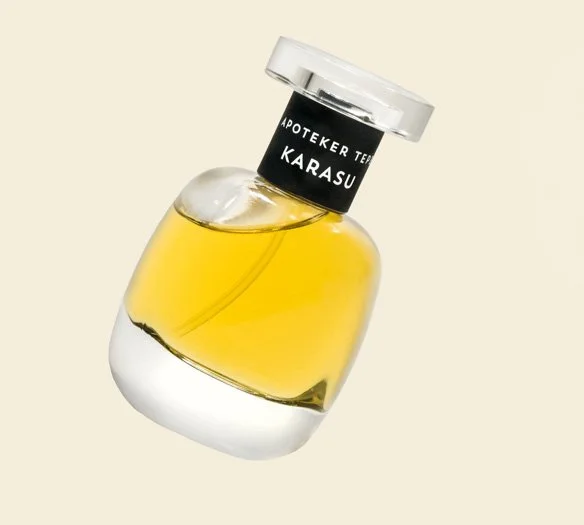
In Japanese mythology, karasu tengu are powerful and vengeful spirits who live in the midst of deep forests, often taking the appearance of crows or of wandering priests. Those brave enough may call upon them through prayer and incense-burning if they are lost, confused, or helpless. Apoteker Tepe’s Karasu combines some of the most traditional raw materials in kōdō, the Japanese incense ritual, to create a fragrance that expresses the spare, transcendent asceticism of a prayer rendered in smoke, dissipating in midair.
"The aster
has flowered, its
pale purple
like the color of smoke
rising from my reveries.
A flock of crows
utterly motionless
turn into pieces
of charcoal, as the flames
from the falling sun subside."
— YOSANO AKIKO
THE COMPOSITION
Pine smoke, Incense, Balsam fir, Labdanum, Guaiacwood
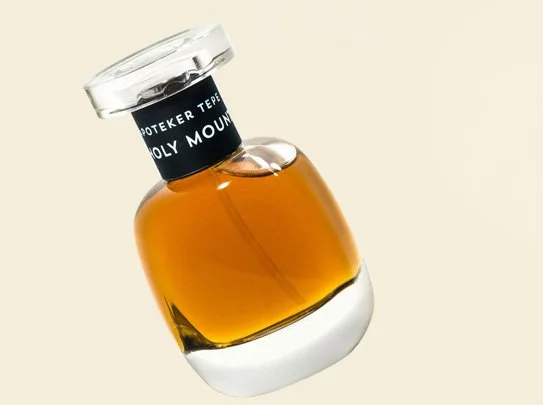
The Holy Mountain is a smoky hearth strewn with incense, an enveloping layer of aged wood and resin melting over a core of dry heat. Mysterious and lasting, The Holy Mountain stays with you and around you, a reminder of warmth and sensuality. It includes over seven precious woods and resins along with a rare extraction of Lapsang Souchong tea smoked slowly over pinewood fires.
"A brother asked Abba Olympios, the priest of the Lavra, for his most protected secrets, and this is what he said:
Do not consort with heretics, keep a fire always burning, and wherever you stay, say repeatedly to yourself throughout the night:
‘I am a stranger.’
I am a stranger.
I am a stranger."
— JOHN MOSCHOS
THE COMPOSITION
Yuzu, pear, ginger root, sweet birch, hinoki, peat, vetiver, incense, smoke, hiba cedar, pine needle, green oakmoss, kuromoji (spicebush).
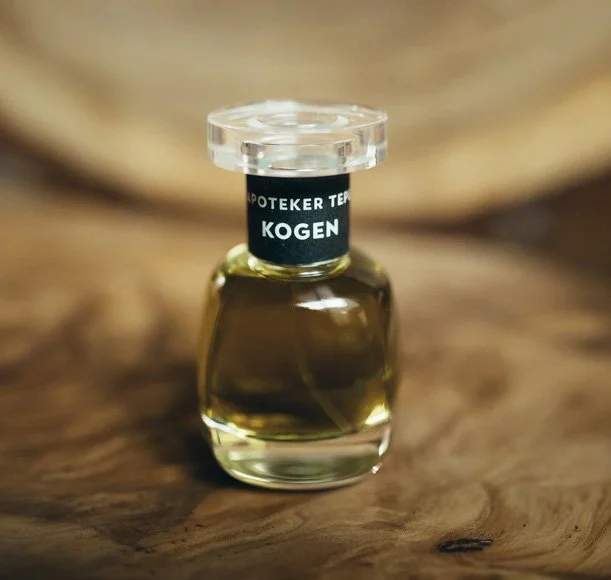
Inspired by Shiga highland forests in Japan. Apoteker Tepe’s Kogen combines Japanese-sourced materials and accompanying selections to convey a crisp forest atmosphere.
"Winter seclusion -
Listening, that evening,
To the rain in the mountain."
— YOSA BUSON
THE COMPOSITION
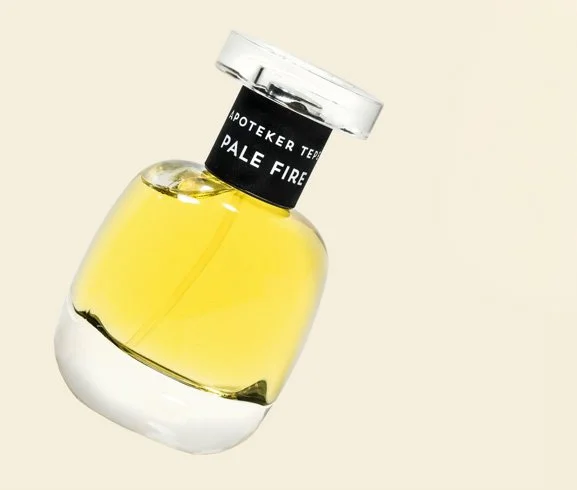
Amber, Olibanum, Oakmoss, Whiskey, Cocoa
Pale Fire is a deconstruction of amber, the first fragrance type to rely on synthetics, but changes this ‘fantasy’ note into something real— the integration of Spanish wildcrafted labdanum absolute and a rare supercritical extraction of Tahitian vanilla. Like the poem which bears its name, Pale Fire exists between appearance and essence, completeness and incompleteness, real and unreal— it is the smell of the feeling the Portuguese call saudade— the longing that remains after a disappearance.
"He borrowed some peripheral debris
From mystic visions; and it offered tips
(The amber spectacles for life's eclipse)—
How not to panic when you're made a ghost:
For we die every day; oblivion thrives
Not on dry thighbones but on blood-ripe lives,
And our best yesterdays are now foul piles
Of crumpled names, phone numbers and foxed files.
I'm ready to become a floweret.
Or a fat fly, but never, to forget."
— VLADIMIR NABOKOV
Part of the Apoteker Tepe Collection, by Holladay Saltz
THE COMPOSITION
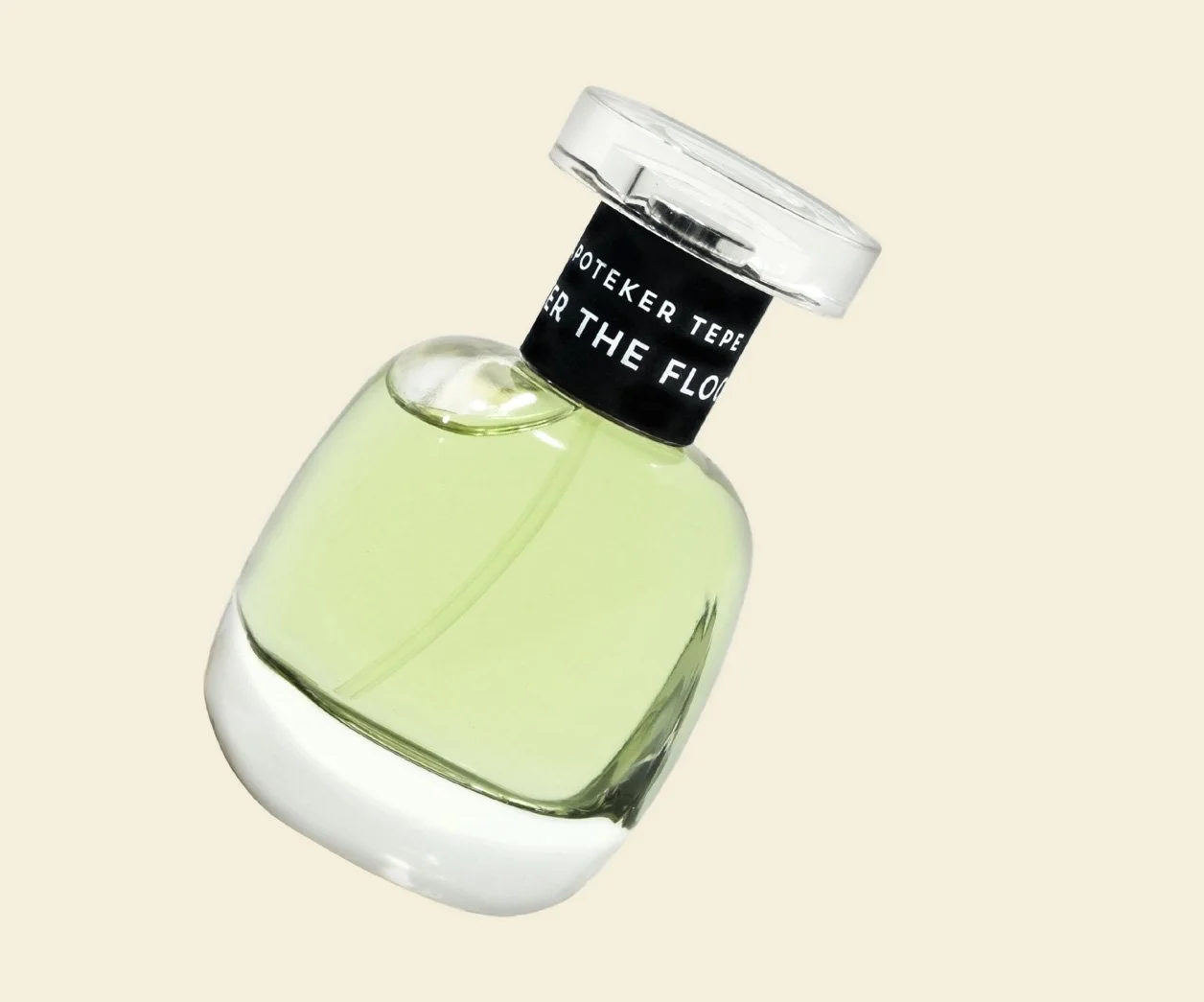
Violet leaf, Water lily, Mushroom, Patchouli, Wet earth
After the Flood is the scent of soil, water, and the delicate stirrings of undergrowth in spring. A contemporary aquatic, After the Flood is both earthy and clean, fresh with hints of loamy darkness. Its delicate green color is due to violet leaf absolute, which flickers in and out of a base of mushroom, soil, and moss like green sunlight though thick branches.
"Rise, pond: – Foam, roll over the bridge and under the trees: – black drapes and organs – thunder and lightning rise and roll: – Waters and sadness rise and raise the Floods again.
Because since they abated – oh, the precious stones burying themselves and the opened flowers! – It’s wearisome! And the Queen, the Sorceress who lights her fire in the pot of earth, will never tell us what she knows, and what we are ignorant of."
— ARTHUR RIMBAUD
Apoteker Tepe
ABOUT THE PERFUMER
Holladay Penick Saltz grew up outside Jackson, Mississippi. She graduated from the Rhode Island School of Design and went on to study fashion and material culture at Parsons and The New School before becoming an academic researcher at the Institute of Play, the Institute for the Future of the Book, and later a visiting scholar at New York University. A chance reading of Diane Ackerman's A Natural History of the Senses reawakened her lifelong fascination with the sense of smell, and she decided to dedicate herself to exploring the ancient, storied history of fragrance and fragrant raw materials. After years of study in the process of formulation and production she was able to train with Le Labo Fragrances in New York City and went on to found Apoteker Tepe in 2014.